The Breakdown – Centres: The Midfield Engine
13 Feb 2026Welcome back to The Breakdown, where we continue to introduce the 15 positions on the pitch to rugby newbies.


Welcome back to The Breakdown, where we continue to introduce the 15 positions on the pitch to rugby newbies.
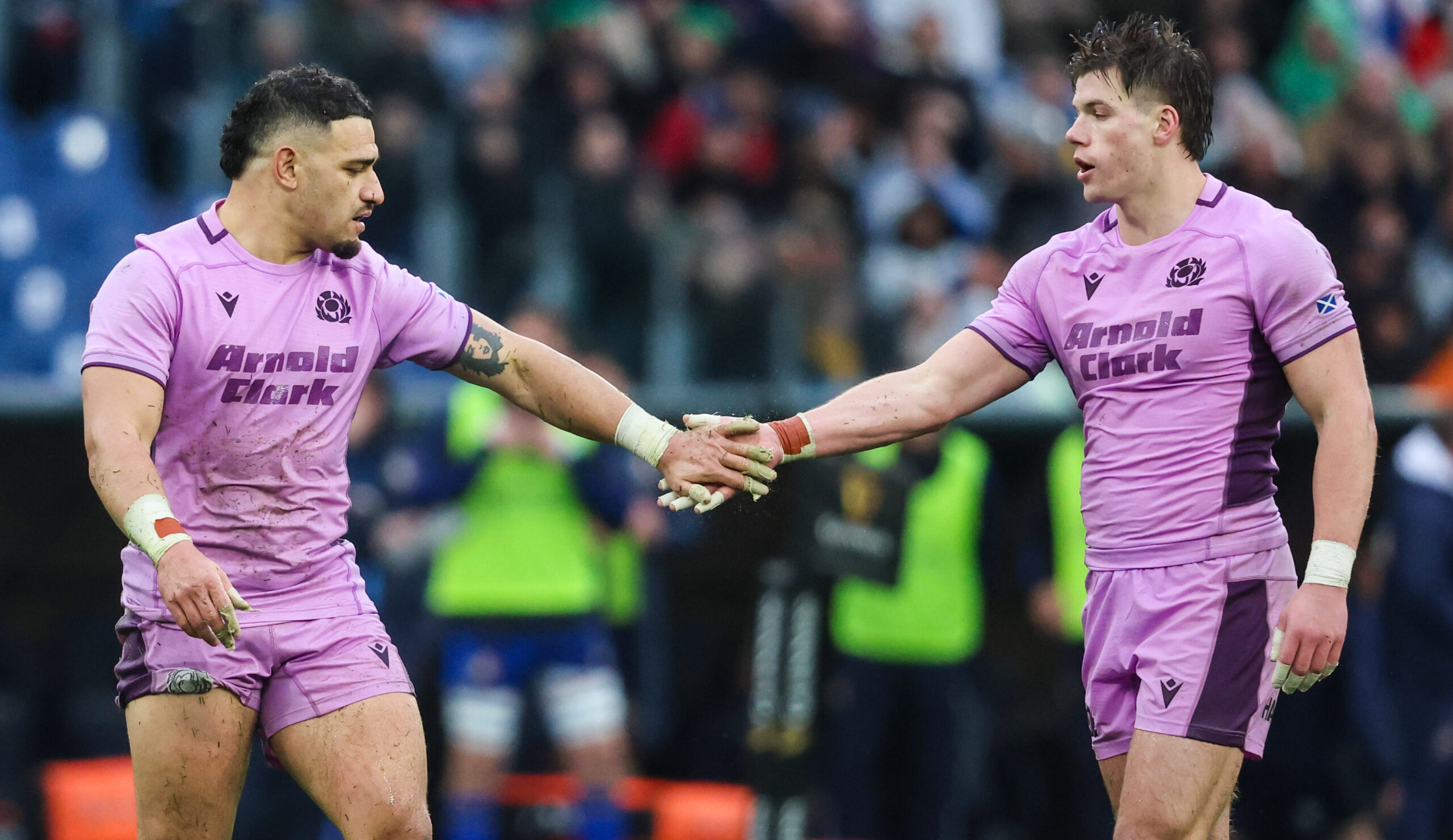 ROME, ITALY - FEBRUARY 07: Scotland's Sione Tuipulotu (L) and Huw Jones during a Guinness Six Nations match between Italy and Scotland at the Stadio Olimpico, on February 07, 2026, in Rome, Italy. (Photo by Ross MacDonald / SNS Group)
 Having explored the power of the forwards and the tactical control of the half-backs, we now move into the midfield to look at the Centres.
If the half-backs are the architects of the game, the centres are the ones who turn those plans into reality. Positioned in the heart of the backline, these players are the team’s multi-tool specialists. They must be physical enough to charge through the heavy traffic of the middle field, yet skilful enough to throw the pinpoint passes that release the wingers. A perfect combination of pace, power and prowess.
What are the Centres?
The midfield is made up of two distinct roles: the Inside Centre (No. 12) and the Outside Centre (No. 13). Together, they have a key role to play in both the team’s attack and defence.
The Inside Centre sits right next to the stand-off and is often considered a second playmaker. While they are usually big enough to crash into defenders to win space, they also need the vision to kick and pass under immense pressure from charging defenders. They essentially act as the glue that keeps the attack connected.
Just outside them, the Outside Centre is typically a faster, more agile line-breaker. Their job is to find the gaps in the defensive wall and burst through them. Defensively, the Outside Centre has one of the most demanding jobs in the game. As they defend the wide channel, they must manage a huge amount of space while staying perfectly connected to the players inside them.
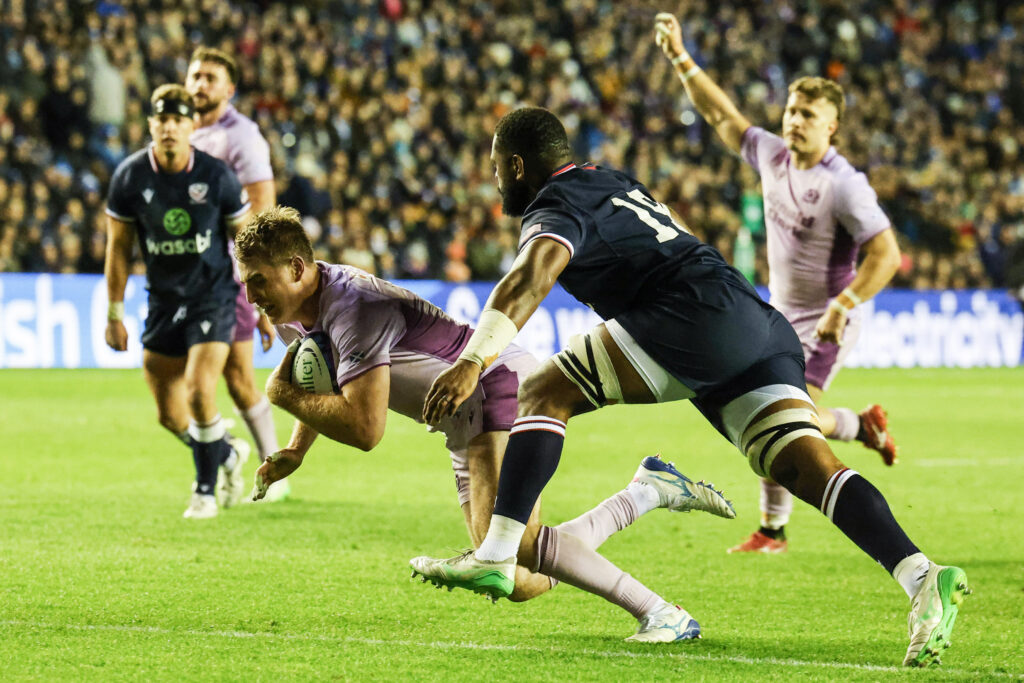
EDINBURGH, SCOTLAND – NOVEMBER 01: Scotland’s Stafford McDowall scores the tenth try during a Quilter Nations Series match between Scotland and the USA at Scottish Gas Murrayfield, on November 01, 2025, in Edinburgh, Scotland. (Photo by Mark Scates / SNS Group)
The Scottish Contingent
Scotland’s midfield for the 2026 Guinness Men’s Six Nation is built around one of the most cohesive and celebrated partnerships in the game. The unit is led by Sione Tuipulotu, who captains the side once again. Playing at inside centre, Tuipulotu is a unique athlete who combines the strength of a forward with the soft passing hands of a stand-off. His presence in the midfield often draws in multiple defenders, creating vital space for his teammates.
His long-standing partner is Huw Jones, the outside centre known for his natural instinct for the try line. The two have started nearly 20 Test matches together, a level of familiarity that allows them to anticipate each other’s moves without saying a word. This “Huwipulotu” partnership is a central pillar of the Scottish attack.
Beyond this starting duo, the squad possesses impressive depth. Stafford McDowall brings a massive physical frame and a valuable left-footed kicking option to the midfield, while Rory Hutchinson offers the elite playmaking and creative flair he has showcased consistently with Northampton Saints. This collection of talent ensures that Scotland can maintain its attacking edge against the elite defences in front of them during the Guinness Men’s Six Nations.
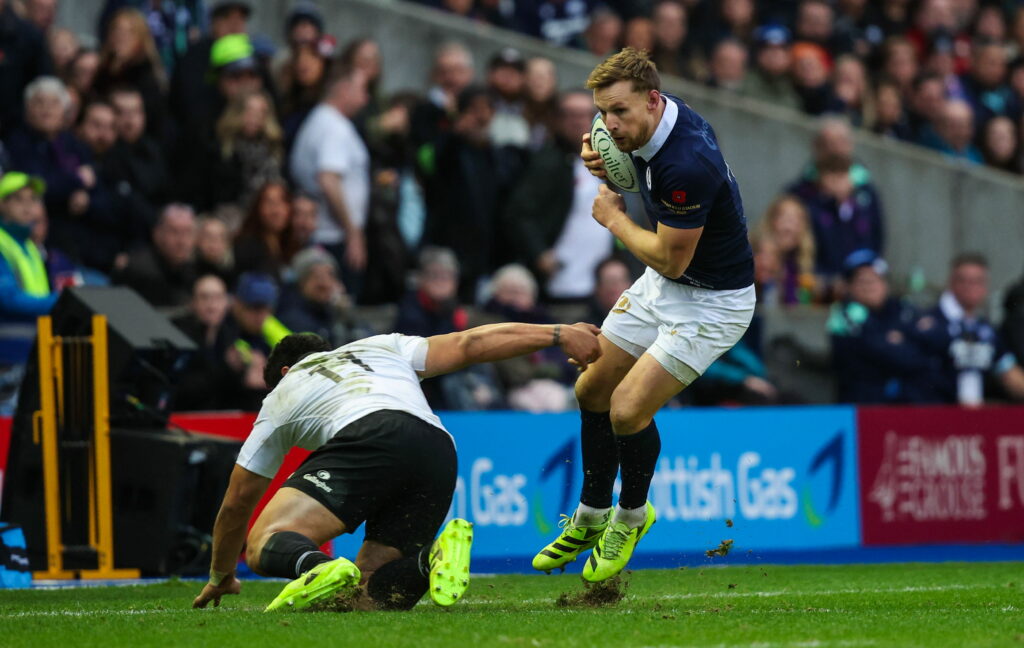
EDINBURGH, SCOTLAND – NOVEMBER 08: Scotland’s Rory Hutchinson (R) and New Zealand’s Caleb Clarke (L) in action during a Quilter Nations Series match between Scotland and New Zealand at the Scottish Gas Murrayfield Stadium, on November 08, 2025, in Edinburgh, Scotland. (Photo by Ross Parker / SNS Group)
The Scotland Centres (Caps in brackets):
 Scotland Men
Scottish Rugby x YETI products now available to buy online
Tue 18 Aug 2026
Scotland Men
Scottish Rugby x YETI products now available to buy online
Tue 18 Aug 2026
 Scotland Men
By the Numbers: Scotland’s Nations Championship Southern Series
Tue 28 Jul 2026
Scotland Men
By the Numbers: Scotland’s Nations Championship Southern Series
Tue 28 Jul 2026
 Scotland Men
How the 2026/27 away kit was built on stone and ice
Wed 22 Jul 2026
Scotland Men
How the 2026/27 away kit was built on stone and ice
Wed 22 Jul 2026
 Scotland Women
Scottish Rugby and Macron launch Away Kit
Wed 22 Jul 2026
Scotland Women
Scottish Rugby and Macron launch Away Kit
Wed 22 Jul 2026
 Scotland Men
Roundup: The Nations Championship Southern Series
Tue 21 Jul 2026
Scotland Men
Roundup: The Nations Championship Southern Series
Tue 21 Jul 2026
 Scotland Men
Match Report: Fiji 17-33 Scotland
Sat 18 Jul 2026
Scotland Men
Match Report: Fiji 17-33 Scotland
Sat 18 Jul 2026
 Scotland Men
Scotland team pay tribute to Scott Hastings
Fri 17 Jul 2026
Scotland Men
Scotland team pay tribute to Scott Hastings
Fri 17 Jul 2026
 Scotland Men
Fiji and Scotland to celebrate record-breaking matchday
Fri 17 Jul 2026
Scotland Men
Fiji and Scotland to celebrate record-breaking matchday
Fri 17 Jul 2026
 Scotland Men
McDowall to lead Scotland against Fiji
Thu 16 Jul 2026
Scotland Men
McDowall to lead Scotland against Fiji
Thu 16 Jul 2026
 Scotland Men
Fiji vs Scotland: Food and Drink Guide
Wed 15 Jul 2026
Scotland Men
Fiji vs Scotland: Food and Drink Guide
Wed 15 Jul 2026
 Scotland Men
Scouting the Flying Fijians: Senirusi Seruvakula’s Fiji Squad
Wed 15 Jul 2026
Scotland Men
Scouting the Flying Fijians: Senirusi Seruvakula’s Fiji Squad
Wed 15 Jul 2026
 Scotland Men
Match Preview: Fiji v Scotland
Wed 15 Jul 2026
Scotland Men
Match Preview: Fiji v Scotland
Wed 15 Jul 2026
 Scotland Men
Fiji vs Scotland Matchday Guide: Kick-off Time, Venue & Info
Tue 14 Jul 2026
Scotland Men
Fiji vs Scotland Matchday Guide: Kick-off Time, Venue & Info
Tue 14 Jul 2026
 Scotland Men
Match Report: South Africa 42 -28 Scotland
Sat 11 Jul 2026
Scotland Men
Match Report: South Africa 42 -28 Scotland
Sat 11 Jul 2026
 Scotland Men
Matthew Fick making impact for Scotland U20s
Thu 9 Jul 2026
Scotland Men
Matthew Fick making impact for Scotland U20s
Thu 9 Jul 2026
 Scotland Men
Match Preview: South Africa v Scotland
Thu 9 Jul 2026
Scotland Men
Match Preview: South Africa v Scotland
Thu 9 Jul 2026
 Scotland Men
Three changes to starting line-up for South Africa test
Thu 9 Jul 2026
Scotland Men
Three changes to starting line-up for South Africa test
Thu 9 Jul 2026
 Scotland Men
How Scotland’s Landscape Inspired the 2026/27 Home Kit
Wed 8 Jul 2026
Scotland Men
How Scotland’s Landscape Inspired the 2026/27 Home Kit
Wed 8 Jul 2026
 Scotland Men
Behind the Curtain: Launching the 2026/27 Kit
Wed 8 Jul 2026
Scotland Men
Behind the Curtain: Launching the 2026/27 Kit
Wed 8 Jul 2026
 Scotland Women
Scottish Rugby and Macron launch new 2026/27 international kits
Wed 8 Jul 2026
Scotland Women
Scottish Rugby and Macron launch new 2026/27 international kits
Wed 8 Jul 2026