The Breakdown – Second Rows: Towering Titans
4 Feb 2026Welcome back to The Breakdown, our series designed to demystify the 15 players that make up a rugby team.


Welcome back to The Breakdown, our series designed to demystify the 15 players that make up a rugby team.
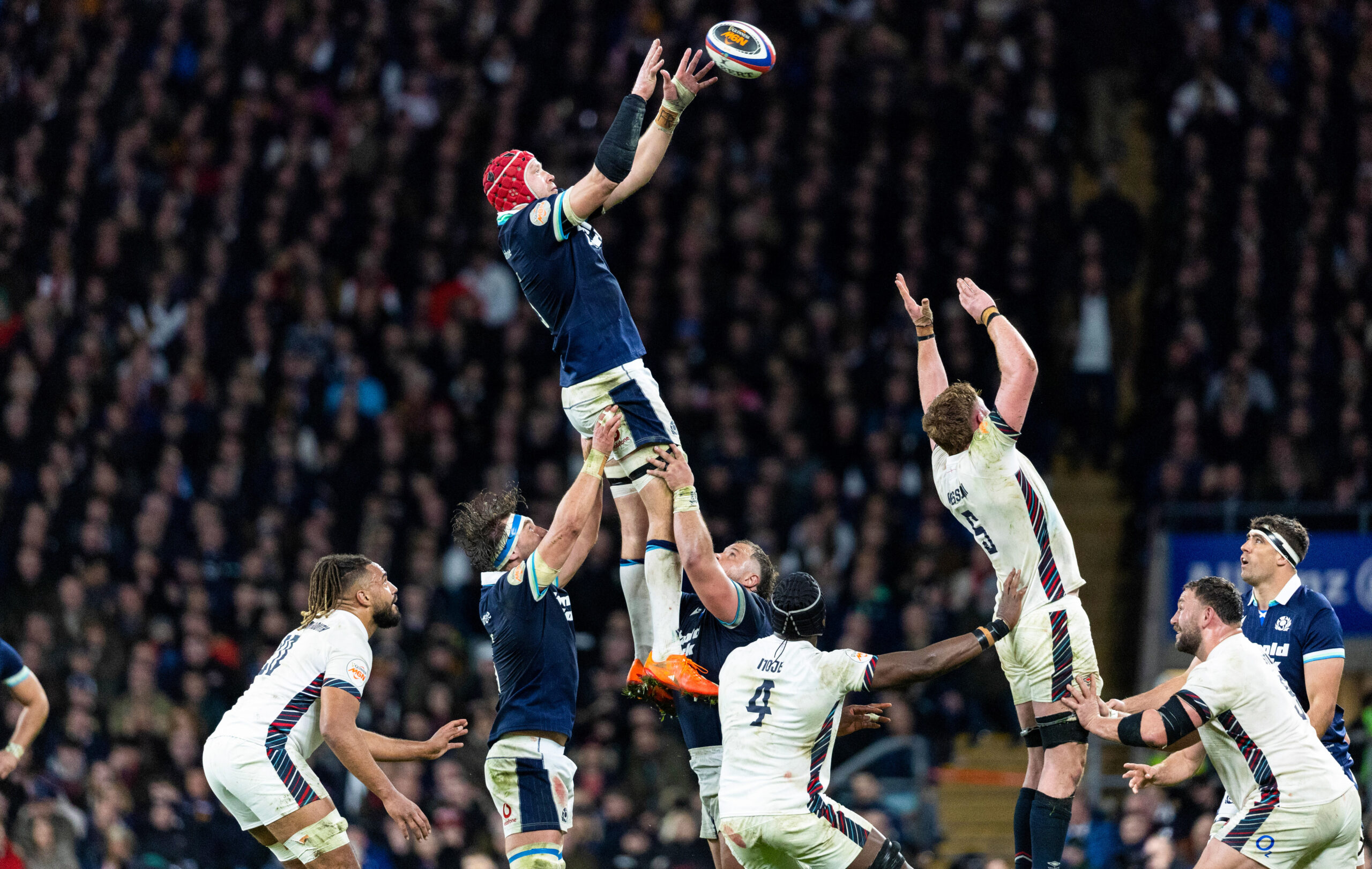 LONDON, ENGLAND - FEBRUARY 22: Scotland's Grant Gilchrist at a lineout during a Guinness Six Nations match between England and Scotland at Allianz Stadium, Twickenham, on February 22, 2025, in London, England. (Photo by Ross MacDonald / SNS Group)
 Our first installment was on the Front Row, the foundation of the team, this episode turns to the second row, the ‘Towering Titans.’
If you’ve ever watched a match and wondered who the two modern day giants are roaming the pitch, that’s the second rows, or locks. Take a look at what their roles are and who will be filling them for Scotland at this year’s Guinness Men’s Six Nations.
What is the Second Row?
Composed of two locks, No. 4 and No. 5, and standing as the tallest players on the pitch, this partnership is often the primary target in the line-out and is the team’s physical enforcement in tight exchanges. Their role is a blend of technical precision in the air and graft on the ground.
The tactical purpose of a lock is built on height and power. In the scrum, they provide the massive shove directly behind the front row to help a team hold their ground and push forward. Without their weight and leg power, the scrum would simply fold under the pressure of the opposition.
You’ll recognise them most at the lineout, the restart when the ball goes out of play. They are the primary targets for the high ball being thrown in by the hooker as discussed in the first instalment of this series.
Set pieces are as important as ever in the modern game and in last year’s Guinness Men’s Six Nations, Scotland won the most lineouts of any nation with 76. This success was built on the clinical efficiency of the second row, with veteran Grant Gilchrist leading the charge by securing 19 lineouts personally.
In the modern game, second rows are defensive pillars. They are tasked with organising the chaos around the edges of a ruck, charging down kicks, and making a massive number of tackles, stopping the other team in their tracks.
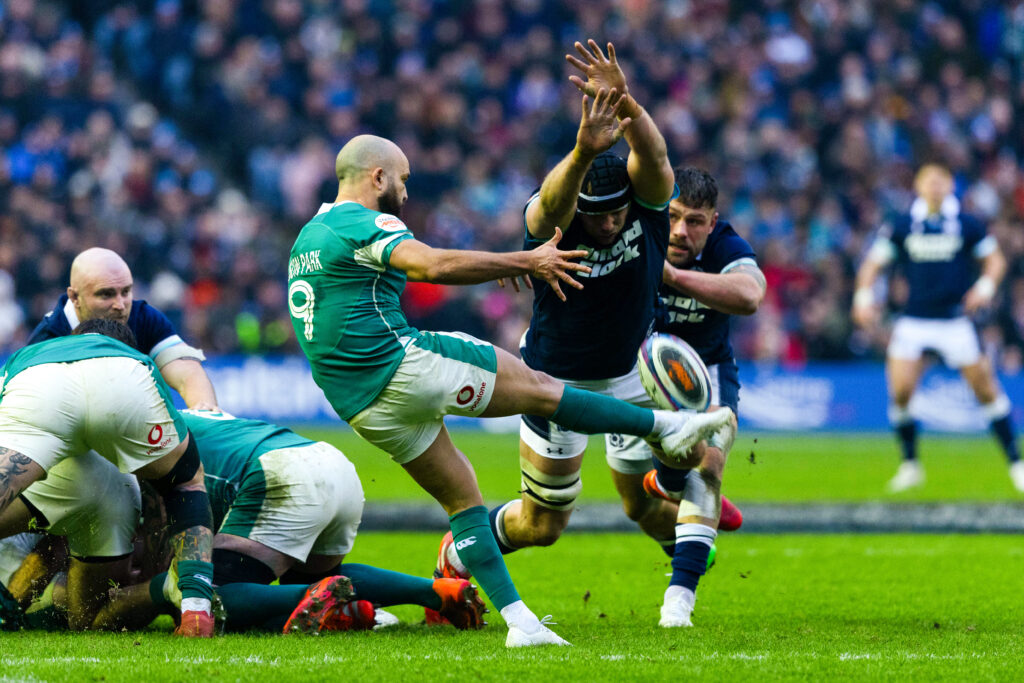
EDINBURGH, SCOTLAND – FEBRUARY 09: Scotland’s Jonny Gray closes down Ireland’s Jamison Gibson-Park during a Guinness Six Nations match between Scotland and Ireland at Scottish Gas Murrayfield, on February 09, 2025, in Edinburgh, Scotland. (Photo by Craig Williamson / SNS Group)
The Scottish Contingent
Scotland’s Second Row for the 2026 Guinness Men’s Six Nations is a formidable unit that combines experience with a physical edge. The group is bolstered by the presence of Jonny Gray, the Union Bordeaux Bègles player who featured in four championship games last year after a two-year absence from the international game. He is joined by the familiar and dependable faces of Grant Gilchrist and British & Irish Lion, Scott Cummings, both of whom remain pivotal to Scotland’s set-piece play.
The squad also features the rising talent of Max Williamson and Alex Craig, who have earned their places on form for Glasgow Warriors. Providing vital tactical flexibility is Gregor Brown, a player equally comfortable at lock or as a physical flanker – we’ll cover these players in the next installment of The Breakdown.
This versatility will allow Scotland to adapt its pack to the many challenges the Guinness Men’s Six Nations promises in the weeks ahead.
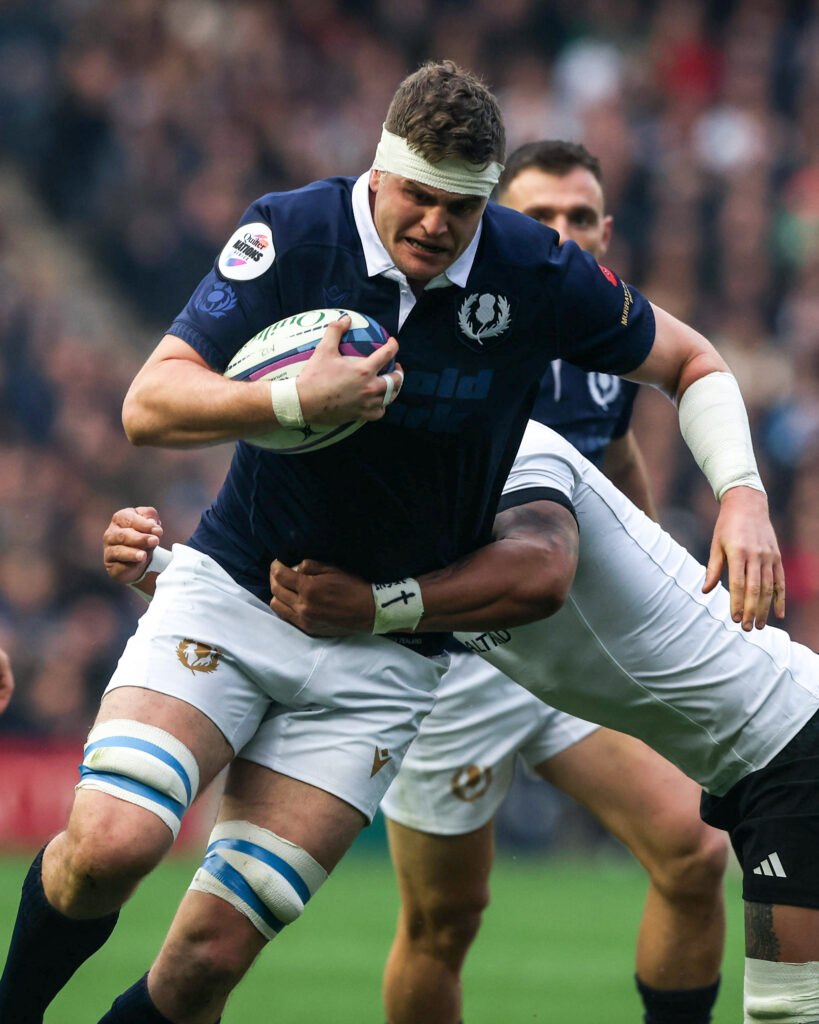
EDINBURGH, SCOTLAND – NOVEMBER 08: Scotland’s Scott Cummings in action during a Quilter Nations Series match between Scotland and New Zealand at the Scottish Gas Murrayfield Stadium, on November 08, 2025, in Edinburgh, Scotland. (Photo by Ross MacDonald / SNS Group)
The Scotland Second-Row:
 Scotland Men
Archie Goodburn to deliver match ball at Scotland v Australia
Wed 21 Oct 2026
Scotland Men
Archie Goodburn to deliver match ball at Scotland v Australia
Wed 21 Oct 2026
 Scotland Men
Josh Kerr to deliver match ball at Scotland v New Zealand
Fri 16 Oct 2026
Scotland Men
Josh Kerr to deliver match ball at Scotland v New Zealand
Fri 16 Oct 2026
 Scotland Men
Exclusive first look: New Archive Collection revealed
Thu 8 Oct 2026
Scotland Men
Exclusive first look: New Archive Collection revealed
Thu 8 Oct 2026
 Scotland Men
Terrace 22: A New Way to Experience Matchday at Scottish Gas Murrayfield
Wed 7 Oct 2026
Scotland Men
Terrace 22: A New Way to Experience Matchday at Scottish Gas Murrayfield
Wed 7 Oct 2026
 Scotland Men
One year to go: The Rugby World Cup 2027
Thu 1 Oct 2026
Scotland Men
One year to go: The Rugby World Cup 2027
Thu 1 Oct 2026
 Scotland Men
Nations Championship Hemisphere Shield Unveiled
Tue 29 Sep 2026
Scotland Men
Nations Championship Hemisphere Shield Unveiled
Tue 29 Sep 2026
 Scotland Men
Marathon Matt set for new sporting challenge
Wed 23 Sep 2026
Scotland Men
Marathon Matt set for new sporting challenge
Wed 23 Sep 2026
 Scotland Men
Scotland v New Zealand Sold Out: VIP & Hospitality Packages Still Available
Thu 10 Sep 2026
Scotland Men
Scotland v New Zealand Sold Out: VIP & Hospitality Packages Still Available
Thu 10 Sep 2026
 Scotland Men
Scottish Rugby x YETI products now available to buy online
Tue 18 Aug 2026
Scotland Men
Scottish Rugby x YETI products now available to buy online
Tue 18 Aug 2026
 Scotland Men
By the Numbers: Scotland’s Nations Championship Southern Series
Tue 28 Jul 2026
Scotland Men
By the Numbers: Scotland’s Nations Championship Southern Series
Tue 28 Jul 2026
 Scotland Men
How the 2026/27 away kit was built on stone and ice
Wed 22 Jul 2026
Scotland Men
How the 2026/27 away kit was built on stone and ice
Wed 22 Jul 2026
 Scotland Women
Scottish Rugby and Macron launch Away Kit
Wed 22 Jul 2026
Scotland Women
Scottish Rugby and Macron launch Away Kit
Wed 22 Jul 2026
 Scotland Men
Roundup: The Nations Championship Southern Series
Tue 21 Jul 2026
Scotland Men
Roundup: The Nations Championship Southern Series
Tue 21 Jul 2026
 Scotland Men
Match Report: Fiji 17-33 Scotland
Sat 18 Jul 2026
Scotland Men
Match Report: Fiji 17-33 Scotland
Sat 18 Jul 2026
 Scotland Men
Scotland team pay tribute to Scott Hastings
Fri 17 Jul 2026
Scotland Men
Scotland team pay tribute to Scott Hastings
Fri 17 Jul 2026
 Scotland Men
Fiji and Scotland to celebrate record-breaking matchday
Fri 17 Jul 2026
Scotland Men
Fiji and Scotland to celebrate record-breaking matchday
Fri 17 Jul 2026
 Scotland Men
McDowall to lead Scotland against Fiji
Thu 16 Jul 2026
Scotland Men
McDowall to lead Scotland against Fiji
Thu 16 Jul 2026
 Scotland Men
Fiji vs Scotland: Food and Drink Guide
Wed 15 Jul 2026
Scotland Men
Fiji vs Scotland: Food and Drink Guide
Wed 15 Jul 2026
 Scotland Men
Scouting the Flying Fijians: Senirusi Seruvakula’s Fiji Squad
Wed 15 Jul 2026
Scotland Men
Scouting the Flying Fijians: Senirusi Seruvakula’s Fiji Squad
Wed 15 Jul 2026
 Scotland Men
Match Preview: Fiji v Scotland
Wed 15 Jul 2026
Scotland Men
Match Preview: Fiji v Scotland
Wed 15 Jul 2026