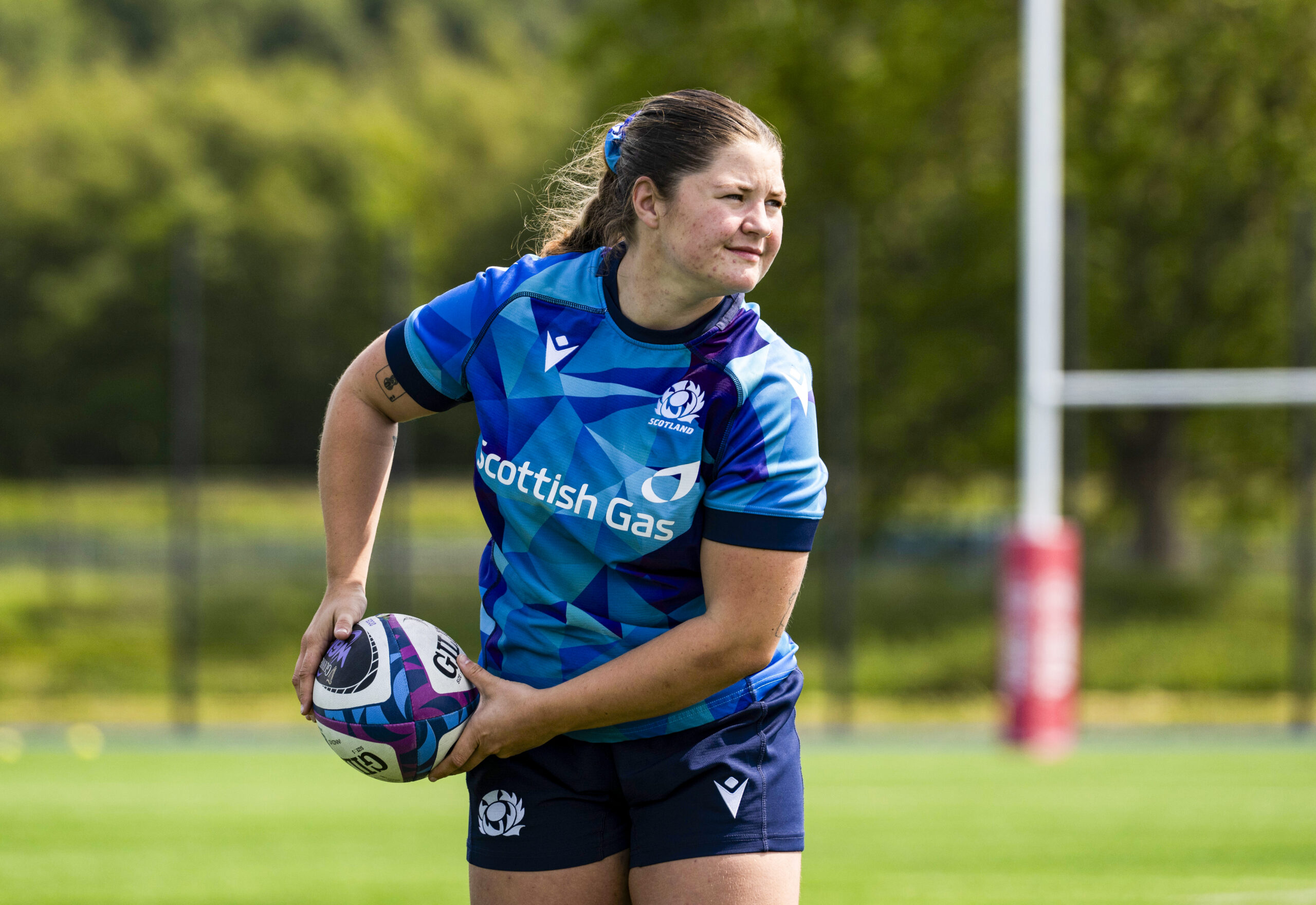
 EDINBURGH, SCOTLAND - JUNE 03: Elis Martin during a Scotland Women's Rugby training session at Peffermill Playing Fields, on June 03, 2025, in Edinburgh, Scotland. (Photo by Paul Devlin / SNS Group)
One of the least discussed yet most impactful aspects of female participation is breast health.
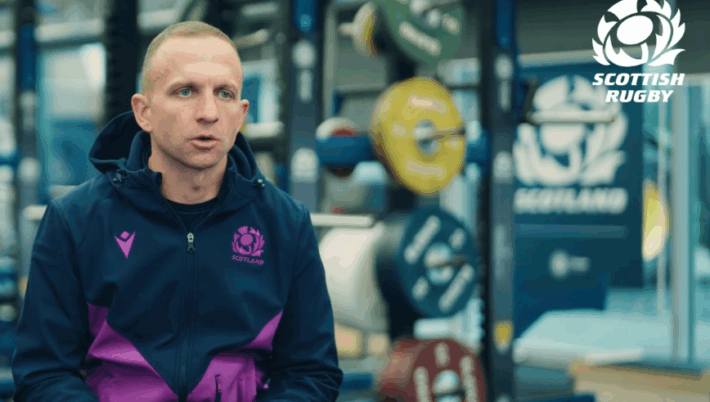
For Florence Laing, Scotland Women’s Head of Medical Services, the issue isn’t just about comfort – it’s about performance, safety, and changing the culture of how we talk about women’s health in rugby.
“These resources are about giving every woman and girl in rugby the knowledge, confidence and support they need to thrive at every stage of their journey,” Laing explains.
“It is so important that female athletes understand aspects of their health which are unique to them. Within the national team, we address women’s health challenges openly, which contributes to creating an environment where players can perform at their best and enjoy the game for longer.”
The science behind the bra
Among the six new information packs released, is breast health. The topic is often underestimated, yet the science shows how transformative the right support can be.
“All females need a well-fitting sports bra to play rugby – it’s a fundamental piece of kit just as boots, shorts or a playing shirt is,” says Laing.
“And actually, if you look at the science, it’s incredible the difference a well-fitting sports bra can make to performance. Research has shown that if an athlete was to run a marathon wearing a properly fitting sports bra they would finish a mile faster than if they were wearing a poor fitting one.”
Rugby is one of the most physically dynamic sports, and the breast – supported essentially only by skin – is especially vulnerable. Laing describes the movement as a “figure-eight pattern” across three planes: up-and-down, side-to-side, and in-and-out. Without proper support, this complex motion not only causes discomfort but can also damage breast structures, impact posture, and affect biomechanics to such an extent that it can increase injury risk elsewhere in the body.
Laing explains: “A well-fitting sports bra helps your knees by controlling breast movement, which in turn influences posture and biomechanics. Early research suggests that high breast support allows for a more hip-dominant landing, reducing stress on the knees and lowering the risk of serious injuries like ACL tears.”
Changing habits, changing outcomes
The impact of these findings is already being felt in Scotland’s national women’s programme. Players receive specialist fittings, breast health education sessions, and medical support when injuries occur – even if it’s “just bruising.”
“You would be surprised at how many athletes have been wearing the wrong size and the difference it has made for them,” Laing notes.
“With the level of importance we have put on breast health in the team, we are now able to track and provide support for any players to help recognise all types of breast injuries, including bruises. It’s so important for us to have athletes reporting this, especially in a contact sport, so we can monitor prevalence and learn how we can help them.
“Breast tissue is different to muscle, and it’s so important for us to provide tailored support and education not just for now, but for later in life too.”
Tech as a game changer
Technology is also helping shift the conversation. Through Vodafone’s PLAYER.Connect platform, breast health has been formally integrated into athlete monitoring for the first time.
The platform also tracks menstrual cycles and related symptoms, allowing coaches, medical and strength and conditioning staff to link health data holistically.
“It’s making a huge difference to the programme,” says Laing.
“Vodafone PLAYER.Connect has been massive in helping us provide that support and track what is going on. For the first time ever, we have breasts on the body chart, so players can mark any breast injuries or breast pain.
“It’s a great way for players to make us aware of this without having to come directly to us if they feel a bit shy. You just pop it onto the system, and it allows me to go to the player and provide that support. It’s really opened up that gateway.
“It also allows us to separate menstrual cycle related breast soreness and contact breast injuries which are treated differently.”
From strapping down to standing tall: Elis’ perspective
While the medical science makes the case for breast health, the personal stories bring it to life. Scotland forward Elis Martin recalls her own journey, one that mirrors the experiences of countless young athletes.
“My experiences growing up, my chest got quite big quite quickly and that made me feel really uncomfortable,” Martin reflects.
“I used to wear two sports bras that were so badly fitted when I did P.E in school or played rugby, and looking back on that and seeing photos from that time you can tell I’m uncomfortable. But at the time I thought effectively strapping them down was the best thing for me.”
For Martin, the turning point came when she entered the national squad and gained access to proper education and support. “Coming into the squad, now getting that support with education and sports bras, I have learned so much. There’s a lot to take into account with back size and cup size. Having Flo [Laing] leading on that and looking into how to best help us, it’s been amazing.
“It’s been so important for us to get the education on how breasts move in sport, what to look out for and report when it comes to contact injuries. Since then, I’ve learned what works well for me and you can tell that when you look back at analysis videos, it’s obvious that I’m supported and comfortable.”
But Martin also highlights an often-overlooked factor: confidence.
“Even though it’s 100% about the science, it also just aesthetically looks better. Everyone is different, but for me I do believe in ‘look good, play good,’ and having a sports bra that fits properly does feed into that.”
Her message is clear: breast health isn’t optional, it’s essential.
“I think for any player who has boobs, no matter what level of the game you are playing at, it is vital to learn about breast health in sport, and that’s amazing that these resources are available for everyone now.”
A cultural shift
What emerges from this initiative is more than a set of resources – it’s a cultural shift. By elevating breast health into mainstream rugby discourse, Scotland is not just preparing to compete on the global stage, but reshaping what it means to support female athletes at every level.
Laing puts it simply: “The more we open up these conversations, the more empowered players at all levels of the game become. And when players are empowered, they stay in the sport longer, perform better, and enjoy it more.”