The Breakdown – Half-backs: The Architects
12 Feb 2026Welcome back to The Breakdown, your guide to the 15 puzzle pieces on a rugby pitch.


Welcome back to The Breakdown, your guide to the 15 puzzle pieces on a rugby pitch.
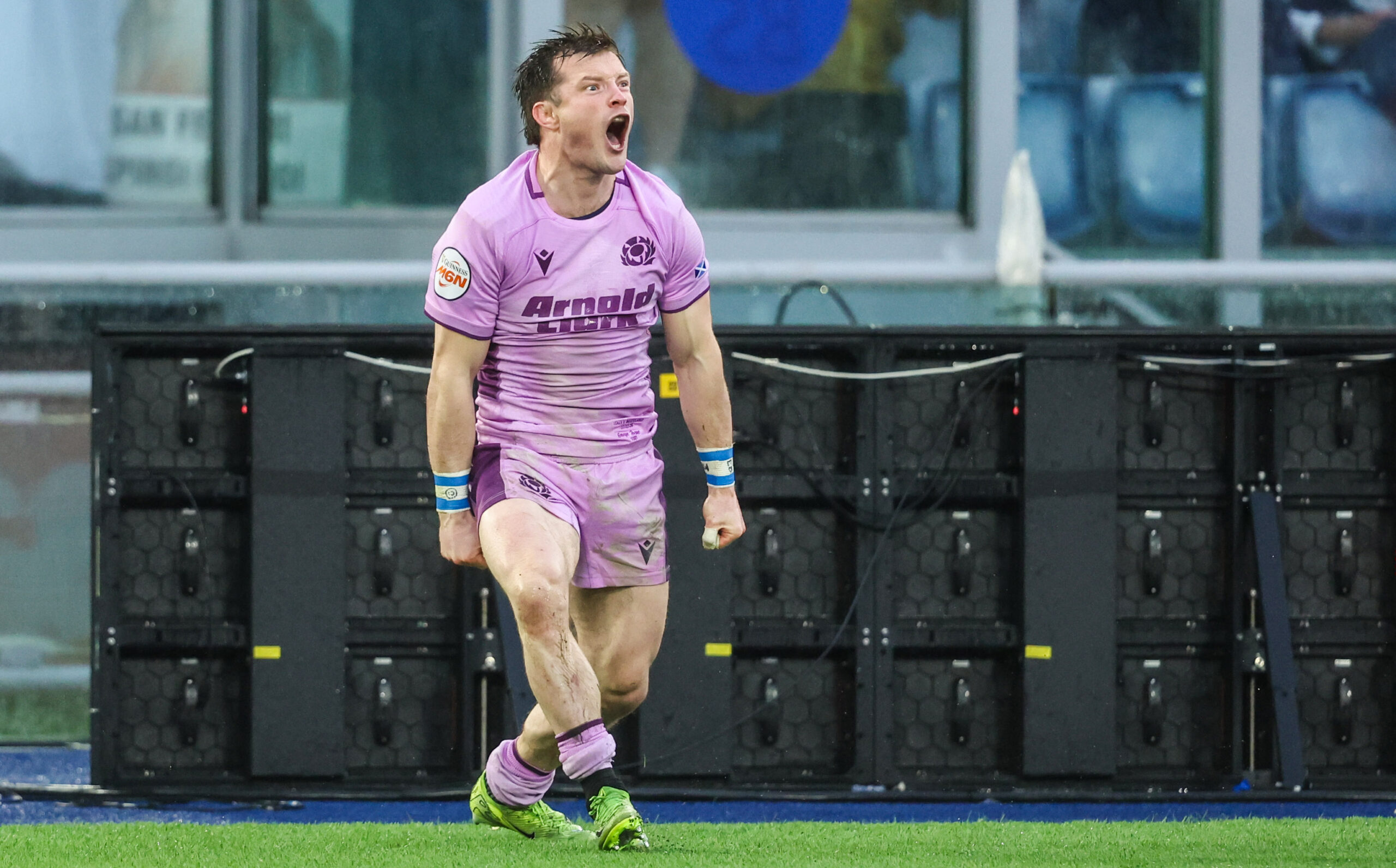 ROME, ITALY - FEBRUARY 07: Scotland's George Horne celebrates scoring his side's second try during a Guinness Six Nations match between Italy and Scotland at the Stadio Olimpico, on February 07, 2026, in Rome, Italy. (Photo by Ross MacDonald / SNS Group)
 We’ve explored the forwards and now we step out of the heavy-hitting pack and start our series on the backs with the half-backs.
If a rugby team were an orchestra, these are the conductors. They don’t just play the game; they decide how it’s played, where the ball goes, and when to pull the trigger on an attack.
What are the Half-backs?
The half-backs are a duo consisting of the Scrum-half (No. 9) and the Stand-off (No. 10). They are the link between the big, powerful forwards and the fast, elusive backs.
The scrum-half is often one of the smallest players on the pitch but also the loudest. They follow the ball everywhere, digging it out of rucks once a tackle has been made and passing it to the next player. They dictate the tempo deciding if the team should play fast to catch the defence off-guard or slow things down to catch their breath.
In Scotland, the number 10 jersey is worn by the stand-off (you might hear others call them a fly-half). They are the primary playmaker. The stand-off normally receives the ball from the scrum-half and decides whether to run it, pass it to the players outside them, or kick it deep into the opponent’s territory. These players have to think fast and react to the chaos in front of them in a matter of seconds before being challenged by the opposing defenders.
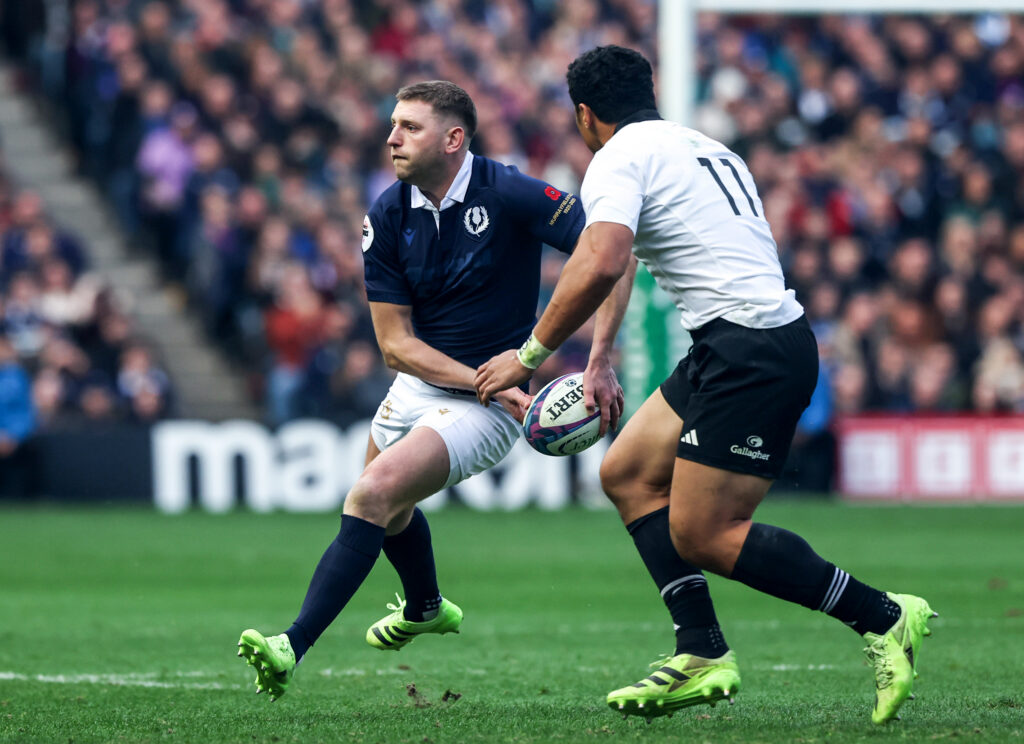
EDINBURGH, SCOTLAND – NOVEMBER 08: Scotland’s Finn Russell in action during a Quilter Nations Series match between Scotland and New Zealand at the Scottish Gas Murrayfield Stadium, on November 08, 2025, in Edinburgh, Scotland. (Photo by Ross MacDonald / SNS Group)
The Scottish Contingent
The Scottish squad for the 2026 Guinness Men’s Six Nations features a group of half-backs with a high level of international experience.
This group of playmakers includes one of Scotland’s current vice-captain Finn Russell, a stand-off renowned for his creative passing and tactical vision. He is joined by Adam Hastings, who provides a strong, direct alternative in the No. 10 jersey, and Fergus Burke, who joins the squad from Saracens as a dynamic playmaking option. At scrum-half, the duties are shared between Ben White, who brings a sharp tactical kicking game, and the agile George Horne, known for his ability to dart around the fringes of the breakdown to score.
A key strength of the current Scottish backline is its versatility. While they often feature in other positions, both Tom Jordan and Jamie Dobie are highly accomplished half-backs. Jordan, primarily a stand-off, adds a secondary playmaking option from the backfield, while Dobie provides elite cover as a natural scrum-half. This flexibility ensures that the architects of the Scottish game are present across the entire pitch.

LONDON, ENGLAND – FEBRUARY 22: Scotland’s Ben White celebrates scoring the first try of the match during a Guinness Six Nations match between England and Scotland at Allianz Stadium, Twickenham, on February 22, 2025, in London, England. (Photo by Craig Williamson / SNS Group)
The Scotland Half-backs (Caps in brackets):
 Volunteer Youth Coach gets The Ultimate Experience with Skyscanner
Wed 11 Feb 2026
Volunteer Youth Coach gets The Ultimate Experience with Skyscanner
Wed 11 Feb 2026
 Community Game Conference guest speakers and programme announced
Wed 11 Feb 2026
Community Game Conference guest speakers and programme announced
Wed 11 Feb 2026
 Cup & Competitions
Scotland Club XV side named for Ireland clash
Wed 11 Feb 2026
Cup & Competitions
Scotland Club XV side named for Ireland clash
Wed 11 Feb 2026
 Scotland Men U20
Interview: Dalziel targets home impact after Player of the Match debut
Wed 11 Feb 2026
Scotland Men U20
Interview: Dalziel targets home impact after Player of the Match debut
Wed 11 Feb 2026
 Scotland Men U20
Two changes for U20 England clash
Wed 11 Feb 2026
Scotland Men U20
Two changes for U20 England clash
Wed 11 Feb 2026
 GB7s
Perth 7s Recap
Tue 10 Feb 2026
GB7s
Perth 7s Recap
Tue 10 Feb 2026
 Fundraising trio hail rugby as a lifeline
Tue 10 Feb 2026
Fundraising trio hail rugby as a lifeline
Tue 10 Feb 2026
 Scotland Men
The Wellermen to perform pre-match entertainment at Scottish Gas Murrayfield
Tue 10 Feb 2026
Scotland Men
The Wellermen to perform pre-match entertainment at Scottish Gas Murrayfield
Tue 10 Feb 2026
 Scotland Men
How to follow Scotland v England this weekend
Tue 10 Feb 2026
Scotland Men
How to follow Scotland v England this weekend
Tue 10 Feb 2026
 Scotland Men U20
Scotland U20 return to Hive Stadium
Tue 10 Feb 2026
Scotland Men U20
Scotland U20 return to Hive Stadium
Tue 10 Feb 2026
 Scotland Men
Match Report: Italy 18-15 Scotland
Sat 7 Feb 2026
Scotland Men
Match Report: Italy 18-15 Scotland
Sat 7 Feb 2026
 Scotland Men U20
Match Report: Italy U20 10-36 Scotland U20
Fri 6 Feb 2026
Scotland Men U20
Match Report: Italy U20 10-36 Scotland U20
Fri 6 Feb 2026
 Scotland A
Match Report: Italy XV 24-24 Scotland A
Fri 6 Feb 2026
Scotland A
Match Report: Italy XV 24-24 Scotland A
Fri 6 Feb 2026
 Scotland Men
Scottish Rugby and Halo join forces in new partnership
Fri 6 Feb 2026
Scotland Men
Scottish Rugby and Halo join forces in new partnership
Fri 6 Feb 2026
 Cup & Competitions
Squads announced for this weekend’s Inter-District Youth Pathway action
Fri 6 Feb 2026
Cup & Competitions
Squads announced for this weekend’s Inter-District Youth Pathway action
Fri 6 Feb 2026
 Cup & Competitions
Arnold Clark Men’s Premierships Feature Match: Currie Chieftains v Kelso
Fri 6 Feb 2026
Cup & Competitions
Arnold Clark Men’s Premierships Feature Match: Currie Chieftains v Kelso
Fri 6 Feb 2026
 Scotland A
Preview: Scotland A v Italy XV
Fri 6 Feb 2026
Scotland A
Preview: Scotland A v Italy XV
Fri 6 Feb 2026
 How to get to Scottish Gas Murrayfield on matchdays
Fri 6 Feb 2026
How to get to Scottish Gas Murrayfield on matchdays
Fri 6 Feb 2026
 Scotland Men U20
U20 Preview: Scotland V Italy
Thu 5 Feb 2026
Scotland Men U20
U20 Preview: Scotland V Italy
Thu 5 Feb 2026
 Scotland Men U20
Scotland U20 Standouts Look Back on Defining Moments at Hive Stadium
Thu 5 Feb 2026
Scotland Men U20
Scotland U20 Standouts Look Back on Defining Moments at Hive Stadium
Thu 5 Feb 2026